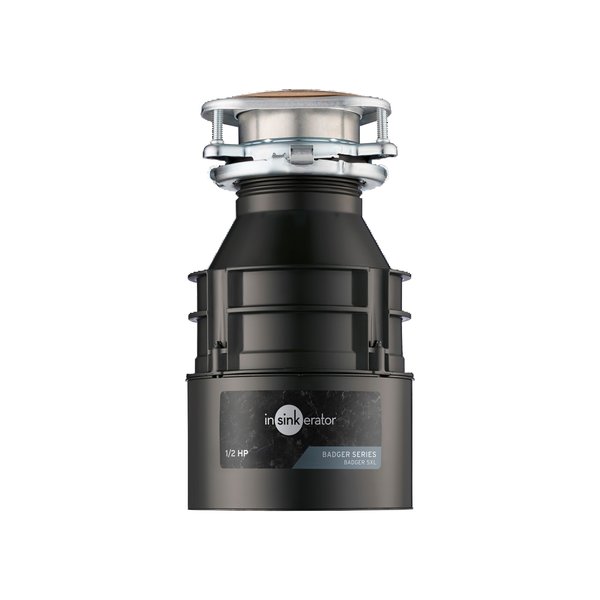
InSinkErator Badger 5XL 1/2-HP Disposal
InSinkErator
$149#1 PICK
Ninety percent of 'dead' disposals aren't dead, they're jammed or tripped. Allen wrench in the bottom, red reset button, done. Buy an InSinkErator and you'll do that maybe twice in 12 years.
InSinkErator
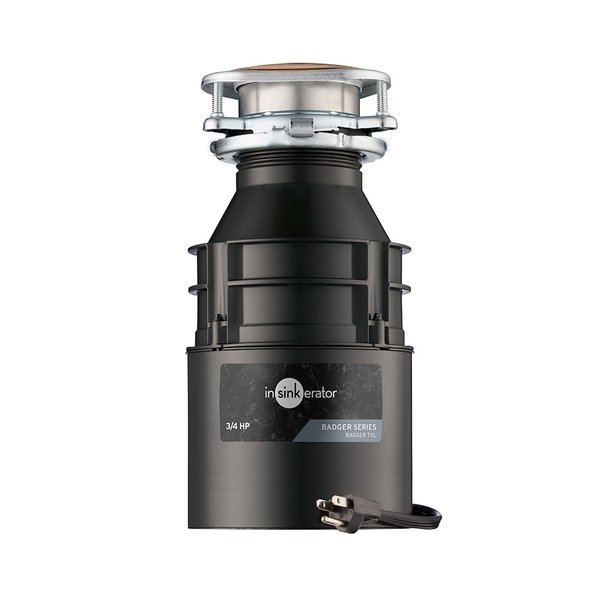
InSinkErator · BADGER 7XL W/C
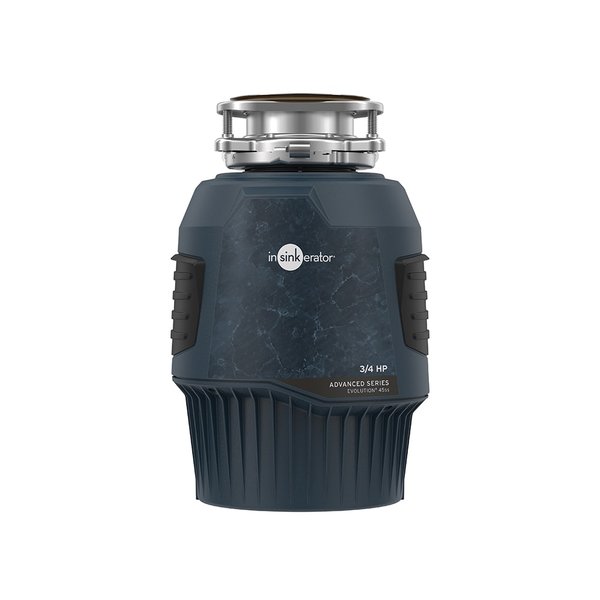
InSinkErator
No matches — widen the filters
For a typical household, 1/2 HP handles everyday scraps fine. The 3/4 HP units earn their price in two ways that matter more than raw power: they jam less on the stuff you shouldn't have fed them anyway, and the better models are noticeably quieter thanks to more sound insulation. Big households and serious cooks: get the 3/4.
Yes — modern disposals are septic-safe in the sense that they grind fine enough. The honest caveat: everything you grind still ends up in the tank, so a heavily-used disposal moves your pump-out schedule up. Scrape plates into the trash, use the disposal for what's left, and your septic guy stays a stranger.
Not bones or fruit pits — fibrous and starchy stuff. Celery, corn husks, onion skins wrap the impellers; potato peels and rice turn to concrete in the trap; and grease coats everything downstream. Run cold water before, during, and after grinding. Most 'dead' disposals I visit are jammed, not broken — there's a hex socket under the unit that frees them in thirty seconds.
Look under your sink. If there's an outlet, buy the corded version (or add a cord kit); if there's a cable coming out of the wall, you're hardwiring. Neither is better — it's purely about matching what your kitchen already has. Swapping a hardwired install to corded is an electrician visit, so match rather than fight it.